Blair and Rubio among names on Gaza ‘Board of Peace’
Maia Davies

 Getty Images
The Trump administration has named US Secretary of State Marco Rubio and former UK prime minister Sir Tony Blair as two of the founding members of its “Board of Peace” for Gaza.
Trump’s Middle East envoy Steve Witkoff and the president’s son-in-law Jared Kushner will also sit on the “founding executive board”, the White House said in a statement on Friday.
Trump will act as chairman of the board, which forms part of his 20-point plan to end the war between Israel and Hamas.
It is expected to temporarily oversee the running of Gaza and manage its reconstruction.
Also on the founding executive board are Marc Rowan, the head of a private equity firm, World Bank chief Ajay Banga and a US national security adviser, Robert Gabriel.
Each member would have a portfolio “critical to Gaza’s stabilisation and long-term success”, the White House statement said.
Trump had said on Thursday that the board had been formed, calling it the “Greatest and Most Prestigious Board ever assembled at any time, any place”.
Further members of the board would be named in the coming weeks, the White House said.
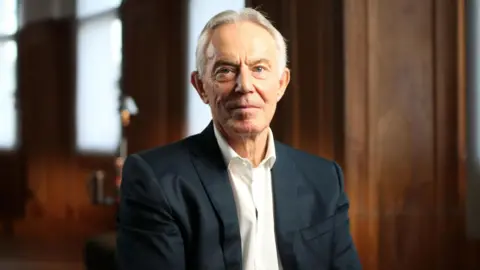
Sir Tony was UK prime minister from 1997 to 2007 and took the UK into the Iraq War in 2003. After leaving office, he served as Middle East envoy for the Quartet of international powers (the US, EU, Russia and the UN).
 BBC/Monika Ghosh
It comes after the announcement of a separate 15-member Palestinian technocratic committee, the National Committee for the Administration of Gaza (NCAG), charged with managing the day-to-day governance of post-war Gaza.
Ali Shaath, a former deputy minister in the Palestinian Authority (PA) which governs parts of the occupied West Bank not under Israeli control, will head that new committee.
The statement also said that Nickolay Mladenov, a Bulgarian politician and former UN Middle East envoy, would be the board’s representative on the ground in Gaza working with the NCAG.
Trump’s plan says an International Stabilisation Force (ISF) will also be deployed to Gaza to train and support vetted Palestinian police forces and the White House statement said that US Major General Jasper Jeffers would head this force to “establish security, preserve peace, and establish a durable terror-free environment”.
The White House said that a separate “Gaza executive board” was being formed that would help support governance and includes some of the same names as the founding executive board as well as further appointees.
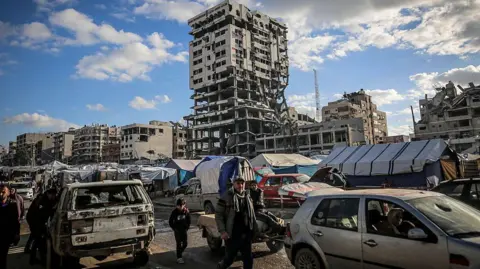
The US peace plan came into force in October and has since entered its second phase, but there remains a lack of clarity about the future of Gaza and the 2.1 million Palestinians who live there.
Under phase one, Hamas and Israel agreed a ceasefire in October, as well as a hostage-prisoner exchange, a partial Israeli withdrawal, and an aid surge.
Earlier this week Witkoff said phase two would see the reconstruction and full demilitarisation of Gaza, including the disarmament of Hamas and other Palestinian groups.
“The US expects Hamas to comply fully with its obligations,” he warned, noting these include the return of the body of the last dead Israeli hostage. “Failure to do so will bring serious consequences.”
However the ceasefire is fragile, with both sides accusing each other of repeated violations.
Almost 450 Palestinians have been killed in Israeli strikes since it came into force, according to Gaza’s Hamas-run health ministry, while the Israeli military says three of its soldiers have been killed in attacks by Palestinian groups during the same period.
And humanitarian conditions in the territory remain dire, according to the UN, which has stressed the need for the unrestricted flow of critical supplies.